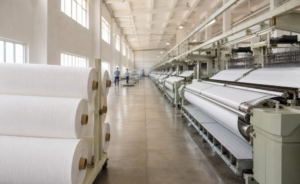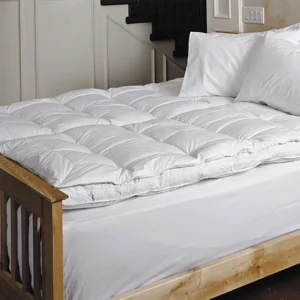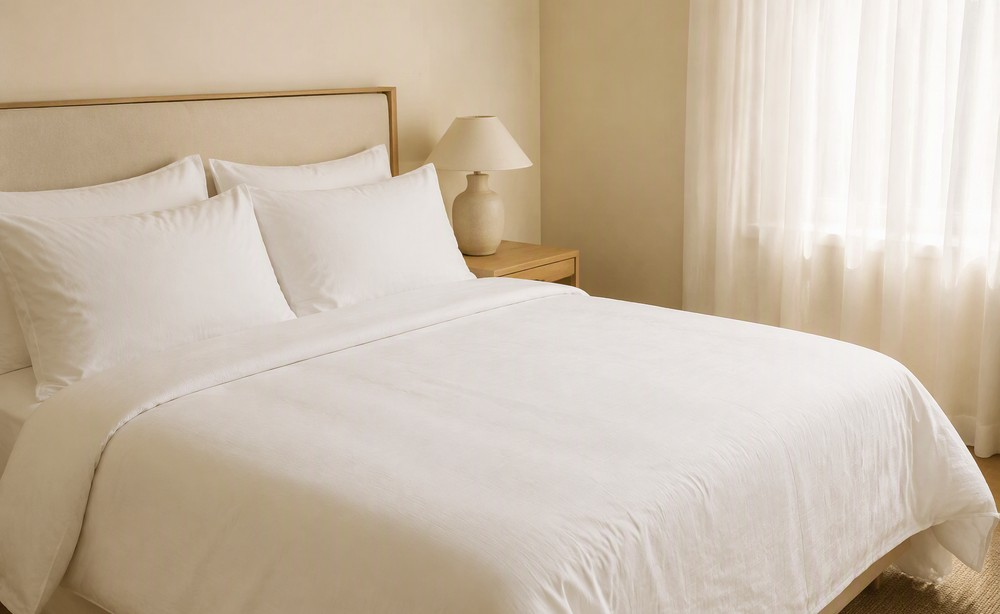
Hotel linen is bought on a different logic from retail bedding. A guest sleeps in it maybe 200 nights a year, and a commercial laundry processes it at 70–85 °C with strong alkali, high mechanical action and a press. Most home-textile factories can produce a beautiful sheet. Far fewer can produce one that still measures the same after its hundredth cycle.
When you are comparing hotel linen manufacturers, the difference is rarely visible in the sample. It is visible in the specification document behind the sample.
The specification document is the product
A hospitality-grade quote should arrive with, at minimum: fibre composition and yarn count, fabric construction (single-pick or double-pick), weight in g/m², thread count per square inch, finish, residual shrinkage limit, colourfastness grades, stitch density, size tolerance, and the test method used for each claim. If a supplier sends a price with only “100% cotton, 300TC”, you are being quoted a commodity, not a specification.
Two claims deserve scrutiny:
Thread count is not quality. Above roughly 300 threads per square inch, most of the additional count comes from multi-ply yarns counted per ply. A 60s single-ply percale at 300TC outperforms a 40s two-ply sateen advertised at 600TC in both durability and breathability. Ask for yarn count and ply, not the headline number.
Weight predicts longevity better than hand feel. Sheeting in the 110–130 g/m² band feels luxurious in the showroom and abrades quickly in a heavy-duty laundry. Hospitality programmes generally sit heavier, and the mill should be able to tell you why its specific weight was chosen for your wash regime.
Shrinkage: set the limit in the contract
Woven cotton relaxes. The question is whether the mill controls it before shipment or lets the laundry discover it.
Specify residual shrinkage after one wash at no more than 3% in warp and weft, measured to ISO 6330 or an agreed in-house equivalent. Then specify what happens on the second and third wash: sanforised and merely pre-washed fabric behave differently over time. A sheet that shrinks 4% over three cycles will not fit a 35 cm mattress by month eight — and the resulting complaint lands on the hotel, not the mill.
Related: confirm the finished size tolerance. ±2% on a king flat is roughly 6 cm — the difference between tucking and not tucking.
Laundry-cycle testing, not just lab tests
Ask what durability testing the mill actually runs, and on what protocol:
AATCC 61 (3A)
- — accelerated laundering, the standard proxy for repeated commercial cycles.
ASTM D5034
- — breaking strength, before and after laundering.
AATCC 8 / AATCC 16
- — crocking and lightfastness for dyed or printed programmes.
ISO 105-C06
- — colourfastness to laundering, where your market specifies ISO over AATCC.
The useful question is not “do you have certificates” but “show me the after-wash numbers for this construction”. A mill with before/after tensile data on file has been through a hospitality audit before.
Do the arithmetic on your own property too. A set turned twice a week faces about 100 cycles a year. If a supplier’s data stops at 50, the rest of the year is an assumption.
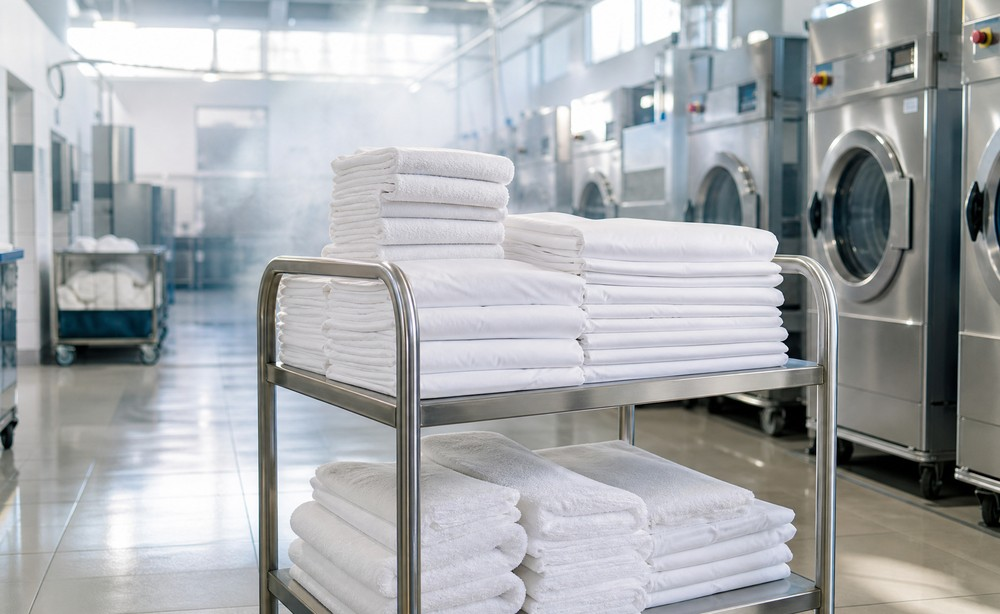
A commercial laundry runs linen at 70–85 °C with strong alkali. After-wash tensile data matters more than a certificate wall.
Colour consistency is a dye-lot discipline, not a colour-matching skill
Hotels reorder. A restaurant opening in March needs napkins that match the ones delivered in September. That requires the mill to hold dye-lot records and either reserve dye for contracted programmes or commit to a Delta E tolerance — commonly ΔE ≤ 1.0 for matched shade, measured on a spectrophotometer under D65.
Ask how the mill handles a reorder placed 14 months later. “We will match as closely as possible” is the answer that produces two visibly different table settings.
The sizes buyers get wrong
Fitted sheets:
- specify mattress depth plus pocket depth, not just “king”. A 30 cm mattress with a 5 cm topper needs a different pocket than a 20 cm mattress.
Bath towels:
- GSM drives absorbency and dry time. Heavier is not automatically better — a 700 g/m² towel that will not dry in a humid bathroom develops odour.
Duvet covers:
- confirm the closure type and whether the inner ties are bar-tacked — the most common field failure in hospitality bedding.
What a proper RFQ should contain
Property type and star positioning; room count and size mix; wash regime (in-house or contracted, temperature, chemistry); expected cycle life; colourfastness and shrinkage limits with test method; certification requirements (OEKO-TEX Standard 100, and BSCI or SMETA if you audit labour); packaging and room-set bundling; delivery window and Incoterm; and the size of the first reorder you expect. That last item tells the mill whether to quote a programme or a one-off, and it moves the price more than buyers expect.
First hospitality orders run longer than repeat retail work because of the pre-production approval loop. Build 90–120 days from PO to delivery for a new construction, and confirm capacity is not already committed to retail peaks.
ЧАСТО ЗАДАВАЕМЫЕ ВОПРОСЫ
How do I verify a hotel linen manufacturer before the first order? Request the specification document, two after-wash test reports with batch traceability, one hospitality reference in your region, and a factory audit report. Then place a paid sample and wash it five times yourself.
Should hotel and restaurant linen come from one supplier? It reduces shade-matching risk, but only if the mill runs both lines. Many do one well and outsource the other.