How to Check a Hotel Room for Bed Bugs
Checking a hotel room for bed bugs takes about five minutes and follows a fixed order. Put your luggage in the bathtub or on the rack. Strip the bedding back. Look along the four seams of the mattress. Then check the headboard, the nightstand and the upholstered chair.
Do it before you unpack, not after. Bed bugs are visible if you know where to look, and the places they hide are almost never the middle of the mattress.
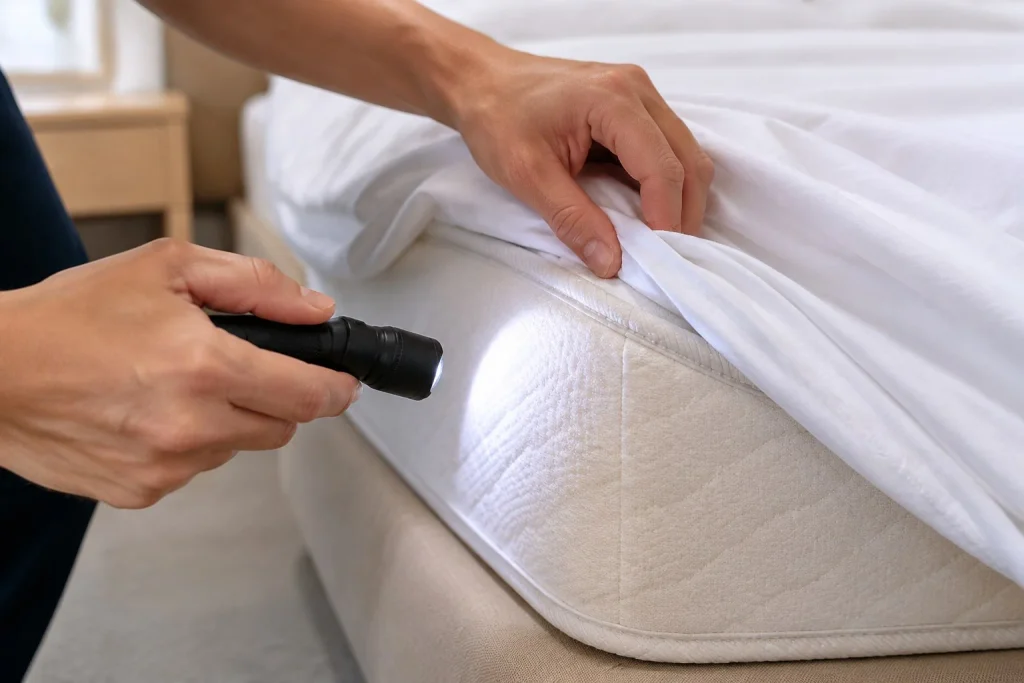
The five-minute routine
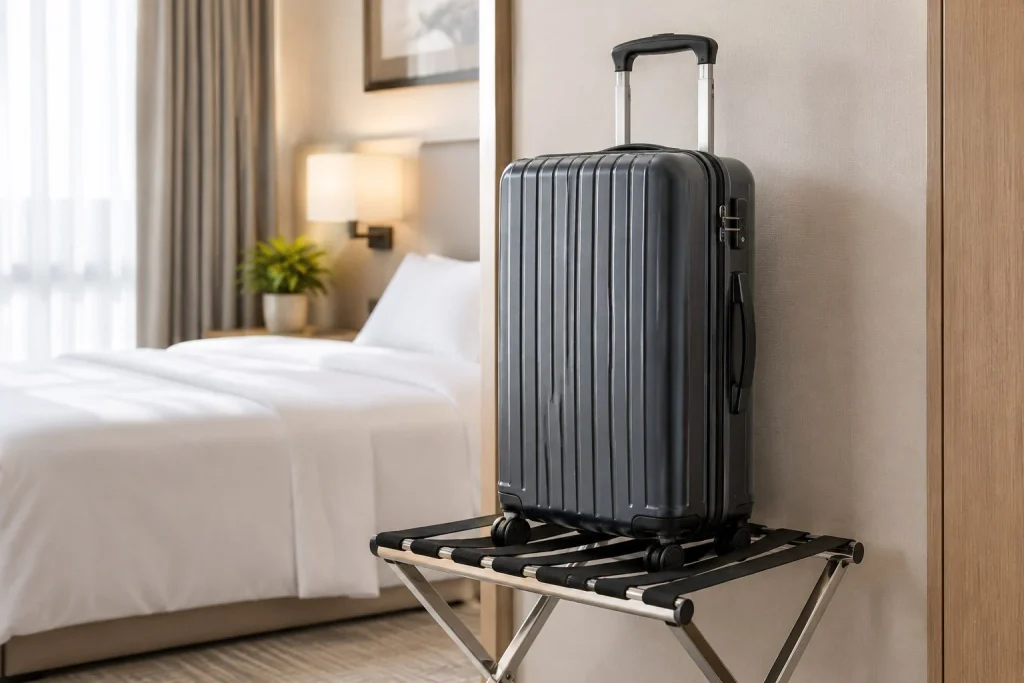
Luggage first. Suitcase in the bathtub or on the folding rack, zipped. Not on the bed, not on the floor beside it, not on the bench at the foot of the bed.
Strip the bed. Pull the duvet and top sheet to the foot end and take the pillows out of their cases. You want the bare mattress and the bare pillow.
Check the four corners. Lift each corner and look at the seam where the side panel meets the top panel. Run a finger along the fold. Bed bugs gather in that seam, not in the flat middle of the panel.
Move to the headboard. This is the step most people skip and the place infestations are most often found. If the headboard is not fixed to the wall, pull it forward and look at the back and at the gap behind it. Use a phone torch.
Then the frame and the furniture. The piping along the box spring or platform edge, the underside of the bed frame, the drawer edges of the nightstand, the seams of the upholstered chair, the top edge of the curtains where they touch the wall.
Finish with the pillows. Look along the piping and inside the seam fold. A pillow with an encased protector is far easier to check, because any evidence sits on a smooth surface instead of in the fabric.
What the signs look like
Adults are about the size of an apple seed, flat and rust brown, darker and rounder after feeding. Nymphs are pale and around 1.5 mm, small enough to look like a speck of dust until one moves.
Four signs are worth knowing, in order of how certain they are.
A live bed bug settles it. Check the seam fold and the gap behind the headboard.
Rust coloured spotting is the most common sign in a room that has been treated or has a light infestation. It looks like small dark dots that bleed into the fabric the way a felt tip pen does, usually along seams and on the box spring.
Shed skins are papery and translucent, and they sit in the same places as the spotting.
Blood smears on the sheet, usually at the head end, mean a fed insect was crushed. One smear is not proof, but it is a reason to keep looking.
What is not evidence: a single bite on your ankle, a dark crumb, a stain that could be coffee. Bite patterns get described as lines of three or four, but plenty of people do not react at all and never see a mark.
Places people forget
The gap behind the headboard is the big one. Many hotel headboards are wall mounted with a gap of a centimetre or two behind them. It is warm, dark, rarely cleaned, and close to where you sleep.
Bed skirts are usually not laundered between guests. Look inside the pleats and along the hem where it touches the floor.
Any fabric covered furniture can harbour them. Check the seams and the underside of the cushions on the chair and ottoman.
Curtain hems and pinch pleats, especially where the curtain touches the floor or the wall.
The mattress label and the bottom edge. Tilt a corner and look at the binding and the law label. It takes ten seconds and it is one of the highest yield places in the room.
The service corridor is worth a glance too. Linen moves between rooms on carts all day, and a cart parked against a wall is an easy transfer point from one floor to another.
If you find bed bugs
Do not accept the room next door. Bed bugs travel through wall voids and along conduit, so the adjacent room is the worst alternative on the floor.
Ask for a room on a different floor or in a different wing, and ask for it in writing. Photograph what you found before housekeeping comes in. Then say plainly that the room should be inspected before it is let again, and ask whether it has been treated before. A property with a real pest programme has a treatment log and will not be defensive about it.
Your belongings need a routine too. Do not open the suitcase on the bed in the new room. Leave it on a hard floor or in the bathroom. Bag anything that was on the bed. Wash and hot dry everything the fabric will tolerate. Thirty minutes in a hot dryer is what kills bed bugs and eggs, and the drying matters more than the washing. Wipe the shell and wheels of the suitcase before you move it.
Compensation varies by chain. A room move is the minimum. A refund for the night is a reasonable ask when live insects were found, and most properties will agree rather than escalate. Keep the photographs and both room numbers.
What not to do
Moving to the adjacent room is the most common mistake. Shared walls and shared headboard mounts are exactly how infestations spread.
Do not spray insecticide. Consumer sprays scatter the insects into new hiding places and make a professional treatment harder. It also puts a chemical in a room you do not control.
Do not stay “just for one night”. One night is enough to pick up bugs or eggs in a suitcase.
Do not read a high star rating as a low risk. Bed bugs arrive with guests. A five star property with high occupancy can have a problem in one room and not in the next.
Do not put your suitcase on the spare bed while you check the first one. That is how one contaminated room becomes two contaminated suitcases.
Do not bag clothes and leave them in the sun. A black bag in direct sun gets warm, but not warm enough for long enough to kill eggs reliably, and it makes the problem harder to see when you unpack.
For hotel operators
You cannot keep bed bugs out of a hotel, because they come in with guests. What you can control is how fast they are found, how far they spread, and whether the room can go back into service without replacing the mattress.
Three measures do most of the work.
Full zip mattress encasements on every bed. An encasement traps anything already inside the mattress and stops new bed bugs from settling in the seams and piping. It also turns inspection into a thirty second job, because the outer surface wipes clean and any evidence shows immediately. Specify a tear resistant encasement with a reinforced zip, and check the zip and seams at every deep clean. A failed zip turns the encasement into a harbourage.
A logged inspection during housekeeping. Two minutes on the mattress seam, the headboard gap and the box spring edge, recorded per room per month, catches most problems while they are still in one room. The log is also what a property needs when a complaint escalates.
Launder the layers that actually get laundered. Bed skirts, blankets and duvet covers are the items most often skipped. A duvet insert used without a cover is where evidence builds up unnoticed.
For procurement, the calculation is simple. Encasements and washable, inspectable bedding cost less than one room out of service for treatment. That line item looks optional until the first incident.
Frequently asked questions
How long does a hotel room bed bug check take? About five minutes for the core routine: luggage placement, stripping the bed, the four mattress corners, the headboard gap, and a quick look at the nightstand, chair and curtains. A full seam by seam check takes fifteen.
Can you see bed bugs with the naked eye? Yes. Adults are roughly the size of an apple seed, flat and rust brown. Nymphs are 1.5 mm and pale. In a light infestation you are more likely to find the spotting and shed skins than a live insect.
Do bed bugs live in the mattress or in the walls? Both, but in a hotel they turn up most often in the mattress seam, behind the headboard and along the box spring piping. They spread to neighbouring rooms through wall voids and conduit, which is why an adjacent room is a bad alternative.
Should I ask for another room or a refund? Ask for a different floor or wing first, and ask that the original room be inspected before it is let again. If you found live bed bugs, a refund for the night is reasonable. Keep photographs and both room numbers.
Can I pick up bed bugs without being bitten? Yes. Plenty of people show no reaction to bites, so luggage is the real risk. Keep the suitcase zipped and off the bed, and hot dry everything when you get home.
HEJ Home Textile supplies mattress encasements, hotel bedding and washable bedding layers for hotels, serviced apartments and healthcare properties. See mattress encasements or request a property specification quote.